









|
RCBJ-Audible (Listen For Free)
 |

Planning Board Pushes Back; Says Applicant Must Get Around Major Safety Deficit Concerning Access For Emergency Vehicles
By Tina Traster
The attorney representing the yeshiva that wants to operate a day school on Route 9W in Upper Nyack has accused the Village of Upper Nyack Planning Board of intentionally delaying decision-making on the controversial application and threatened to take legal action if the board continued to act in an “arbitrary and capricious” manner.
Planning Board Attorney Noelle C. Wolfson, of Hocherman, Tortorella & Wekstein, LLP, pushed back on the allegations in Attorney Joseph Churgin’s April 1 letter to the board, writing that the application involves “careful thought and planning,” adding that the board has been “diligently exercising its best efforts to facilitate a comprehensive and responsible review of this application in accordance with applicable legal standards.”
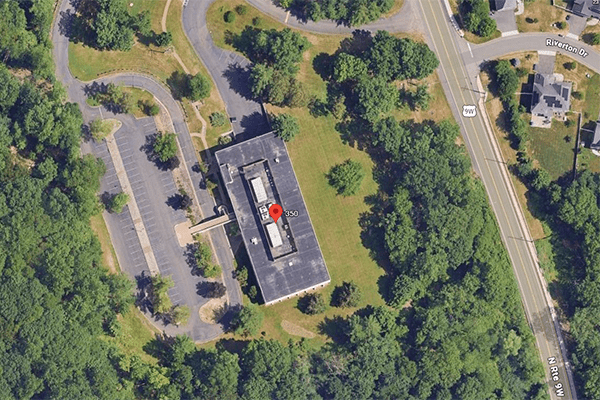
Congregation Ramapo Cheder is seeking a Special Permit to operate a Jewish Day School for 400 boys at the former Alliance Theological Seminary at 350 North Highland Avenue in Upper Nyack.
Churgin has taken issue with the procedure used by the Planning Board to review the EAFs (Environmental Assessment Forms), saying it is inappropriate for the board to review Part II “question by question, in public.” He asserts that this pacing of reviewing the 10-page application would stretch for months.
Part II identifies potential environmental impacts by assessing whether the proposed project will have no, small, or moderate-to-large environmental impacts, helping the Planning Board make a declaration of significance under SEQRA.
The attorney says in most municipalities where he has represented clients, the board’s engineer or planner reviews the EAFs. Citing SEQRA (State Environmental Quality Review Act), which reads: “Agencies must carry out the terms and requirements of this Part with minimum procedure and administrative delay, must avoid unnecessary duplication of reporting and review requirements by providing where feasible for consolidated proceedings and must expedite all SEQRA proceeding in the interest of prompt review.”

In laying out his case, he refers to five applications the board has previously reviewed for unlisted actions between 2018 and 2024, concluding that review was done by the town engineer, and then referred to the planning board for review. The completion of the EAFs were not conducted by the planning board in public.
“There was not one single project in which the Board wasted valuable time at a public hearing considering each question in Part II,” he wrote. For example, he refers to an application for the expansion of The Summit School building, where the board did not involve the fire district in its review and the village engineer viewed Part II.”
In rebuttal, Upper Nyack Counsel Wolfson described the Summit School application as a minor expansion of the existing school’s cafeteria of approximately 450 square feet. The layout of the Summit School “is materially different than the layout your client is proposing” and the school has two access driveways along its North Broadway frontage.
What makes the application most thorny is that the proposed use of the Seminary property for a school of more than 400 boys calls for a second ingress and egress for emergency vehicles, but the property at 350 North Highland Avenue only has one way in and one way out.

Churgin’s letter cites five prior applications before the board to make a case for disparate treatment. Wolfson fires back with “none of them included the reuse and redevelopment (including a land disturbance exceeding two acres) of a property that has been vacant for several years for a use that would bring hundreds of people to one environmentally constrained site six days per week for much of the year.”
Signing off, Churgin wrote, “We can only surmise that this deviation from the established practice and procedure is being done to unduly delay the process.” He said his client is losing $50,000 in rental payments per month for each month it is out of the building.
A memo outlining issues in Part II of the Draft EAF was prepared on April 13th by Village Engineer Dennis Letson at the Planning Board’s request. But Wolfson reminded Churgin that the issue over a single egress and ingress to the property remains a sticking point.
“The fact remains that significant legitimate concerns about emergency access persist,” she wrote.
The Nyack Joint Fire District (NJFD) Board of Commissioners have put concerns in writing to the Planning Board. At both the Feb. 25 and March 17 meetings, Churgin’s client was directed to meet with the NJFD to develop a design that addresses the emergency access concerns. Board Chair Bill Pfaff had asked for village representatives to attend that meeting.
The Fire District met with the applicant and its experts last week, as well as representative from the Village and the Planning Board.
“The Fire District explained that the temple to the south, the high school to the north, and the camp further north have coexisted with two access roads into/out of their sites,” said Attorney Donald Feerick, who represents the district. He said “two distinct access points allow proper fire emergency responses onto and off the site.”
Feerick said the Fire District prefers conformity with the two-access rule, rather than a deviation to one entry point. The applicant told the Fire District it is trying to come up with a second access point for ingress and egress.
At the March 17 Planning Board meeting, the applicant disputed the need for a secondary access road, saying “it remains our opinion that a secondary emergency access driveway located south of the main driveway is not a necessary or feasible option for this project.” According to its expert, the topography, steep slopes, and proximity to wetlands makes construction of a secondary emergency access road infeasible.
A second expert retained by the applicant from Bruce Bingham & Associates submitted a memo saying, “It is my opinion based upon 30 years of experience in the fire industry with 15 years exclusively inspecting private and public NYS schools that the compliance for two access points would impose a practical difficulty or unnecessary hardship on the school’s layout while providing no significant improvement in actual fire safety of students and staff in a single access configuration.”
Residents who have banded together to fight the application also say the project does not meet the fire and safety codes.
“The record before the Village does not demonstrate that first responders can reliably and safely access the site based on the actual conditions,” wrote Kristen K. Wilson of Marks DiPalermo Wilson, who is representing a group of residents opposing the project. “No property owner should be approved for a development that is designed to fail.”
The Planning Board will meet Wed., April 15 at 7:00pm at the Nyack Library to hear the application.