









|
RCBJ-Audible (Listen For Free)
 |
As The Number Of Rockland County Homes Selling For Over $1 Million Increases, Buyers Face A State “Mansion Tax” On Transfer
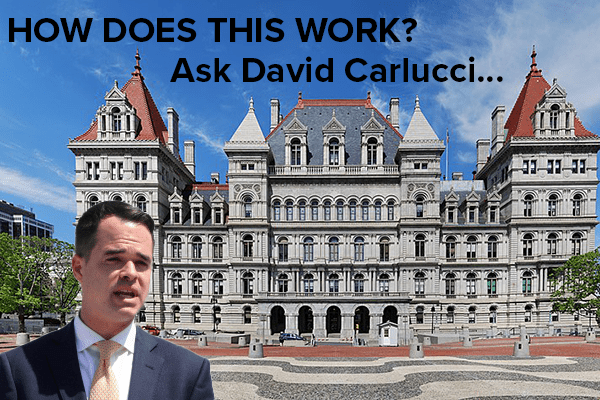
By David Carlucci
Sales of homes in Rockland County in the $1 million to $1.5 million price range saw a significant 54% increase in 2024 compared to the previous year. Zillow reports the median sales price for a single family home in Rockland County in October 2025 was $720,000.
According to available market data, Monsey had a median home price of $1,130,000 based on 59 sales, Montebello had a median home price of $1.1 million, and Palisades had a median price of $1 million across 12 sales. The data points show a robust and growing market for Rockland County homes priced over $1 million throughout 2025.
What is the mansion tax?
New York State imposes a “mansion tax” on the purchase of residential real estate when the price hits $1 million or above, regardless of whether the property is a co‑op, condo, single‑family home, or townhouse. The tax is due at closing and is typically paid by the buyer, unless the parties negotiate otherwise in the contract.
The core idea is simple: once the sale price crosses $1 million, the state adds a percentage charge on top of the regular transfer taxes and standard closing costs. For Rockland County buyers already stretching to compete in a tight Hudson Valley market, that extra line item can be the difference between winning a house and walking away.
How the tax is calculated?
Outside New York City, the mansion tax is a flat 1% of the total purchase price on residential properties of $1 million or more. That means a $1,000,000 purchase triggers a $10,000 mansion tax, while a $1,250,000 sale generates a $12,500 bill, paid in a lump sum at closing.
In New York City, there is a separate, more aggressive tiered schedule where the rate increases as the price rises, ultimately reaching as high as 3.9% on properties over $25 million. Those higher brackets do not apply in Rockland, but the $1 million trigger is the same, so suburban buyers near the city line can feel urban‑style sticker shock without the city’s higher rates.

Why $1 million matters more now
When Albany set the mansion tax threshold at $1 million in 1989, that price point clearly signaled luxury, but decades of appreciation have turned $1 million into a far more common number in downstate counties. In Westchester and Rockland, the share of single‑family home sales at or above $1 million has grown steadily, pulling more middle‑ and upper‑middle‑income households into a tax originally marketed as a rich buyers only surcharge.
Rockland’s proximity to New York City, its limited land, and persistent demand from commuters all contribute to elevated home values compared with much of the state. Local studies have already found Rockland residents paying among the highest property tax bills in the nation, and the mansion tax stacks one more cost on top of that burden for qualified sales.
The push to move the threshold to $2 million
As $1 million homes become routine in parts of the Hudson Valley, downstate lawmakers and real estate advocates have been pressing to raise the mansion tax trigger to $2 million. Their argument is that an unchanged $1 million line now captures ordinary family homes rather than just high‑end estates, undermining fairness and discouraging mobility in an already expensive region.
Raising the threshold would immediately remove many Rockland transactions from the mansion tax altogether, especially in neighborhoods where prices cluster just above $1 million. For sellers, that could broaden the pool of potential buyers by lowering all‑in closing costs; for buyers, it would free up cash for renovations, furnishings, or simply making the monthly payments more manageable.

What it means for Rockland’s business community
For Rockland County businesses tied to real estate brokers, attorneys, lenders, contractors, and local retailers the mansion tax is more than a line in the state tax code; it is a friction point in the deal pipeline. Buyers factoring in an extra $10,000 or more at closing may delay purchases, bid lower, or opt for smaller properties, which can ripple through everything from mortgage volume to renovation spending.
Local economic development also feels the effect when relocating professionals view Rockland as just as expensive as the city because of layered taxes and fees, even though Rockland markets itself as a more affordable alternative. Any change in the threshold to $2 million or beyond would re‑draw that cost map, with direct consequences for where families choose to buy, how quickly inventory turns over, and how much money gets reinvested in Rockland’s housing stock and Main Street businesses.
David Carlucci consults organizations on navigating government and securing funding. He served for ten years in the New York Senate.