






Kingston Seeks Developer For Former Irish Community Center Property On Abeel Street
 After years of false starts, the Irish Cultural Center abandoned plans to develop its new headquarters and donated its real estate on Abeel Street to the City of Kingston in June. Kingston is seeking a developer for the property and has issued an RFEI (Request For Expressions Of Interest) to developers with “the vision, experience, technical expertise, and financial capacity to successfully redevelop the Property in a manner that advances the City’s planning objectives and serves a public purpose.”
After sitting vacant for nearly 30 years, the two parcels on 32 and 33-39 Abeel Street had previously been approved by Kingston’s Planning Board for the Irish Cultural Center, a three-story, approximately 16,000-square-foot building designed to be integrated into the site’s existing hillside. Construction of the project never materialized though some site infrastructure improvements were undertaken, including the installation of water and sewer connections. The site sits in an excavated state, and has become known to locals as “the pit.”
Mayor Steve Noble said, “This is a great opportunity for a forward-thinking developer to utilize this prime property that overlooks the Rondout Creek and the Waterfront neighborhood’s amenities.”
The city would consider a “range of development concepts, including residential, mixed-use, commercial, cultural, civic, or other community-serving uses that contribute to the vitality of the neighborhood. In addition, the City seeks proposals for a context-sensitive infill development that complements the historic character, scale, texture, architectural heritage, and pedestrian-oriented nature of the Rondout–West Strand Historic District.”
The Rondout–West Strand Local, State, and National Historic District was established in 1979 and encompasses the area sloping down to and featuring the waterfront on Rondout Creek.
For proposals that include residential development, the City strongly encourages the inclusion of affordable housing opportunities with the proposals maximizing the number of affordable units to the extent feasible.
Under the existing zoning, building heights allow up to 3.5 stories, or up to 5.5 stories with 20% affordability. Lot coverage is up to 100%. A wide range of permissible uses include retail, commercial/lodging, residential, eating/drinking, cultural, and education. And the code allows a building footprint (per building) up to 10,000 square feet. There is no limit on residential density, and there is no minimum parking requirement.
Under the City’s Form-Based Code, the property is located within the T5 Neighborhood Transect Zone, which is intended to provide a range of housing options through medium- to high-density building types that reinforce the neighborhood’s walkable character, support nearby neighborhood-serving retail and service uses, and encourage transportation alternatives.
Any proposed development must comply with the City’s Form-Based Code and will be subject to review by the Historic Landmarks Preservation Commission (HLPC) for consistency with the character of the Rondout-West Strand Local, State, and National Historic District.
The RFEI can be seen here. Proposals are due September 30, 2026.

Orange County Opens Fall Funding Cycle For Open Space
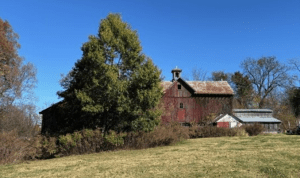 Orange County has opened its Fall 2026 funding cycle, inviting municipalities and conservation partners to apply for support through the County’s Open Space Fund.
The initiative aims to advance priority open space preservation projects that protect natural resources, enhance community recreation, and strengthen long‑term environmental stewardship across Orange County.
The Open Space Fund is available to all municipalities.
“I strongly encourage our towns, villages, and cities to take full advantage of this opportunity,” County Executive Steve Neuhaus said. “This fund gives municipalities a meaningful way to protect natural resources, preserve community character, and invest in projects that will benefit residents for generations.”
Orange County developed the Open Space Fund Program to provide matching financial support for projects that protect valuable open space throughout the County, including farmland, forests, waterways, and community parkland.
The Fund supports fee simple purchases, acquisition of development rights, and conservation easements.
Funding can cover up to 50 percent of the purchase price, but cannot exceed 50 percent of the appraised value. Two funding cycles are offered each year, one in the Spring and the other in the Fall.
The program is designed to advance the goals and recommendations outlined in key County planning documents, including the Orange County Open Space Plan, the Orange County Comprehensive Plan, and the Orange County Agricultural and Farmland Protection Plan.
Eligible applicants include towns, villages, and cities, not-for-profit organizations, and individual property owners.
The submission deadline is September 25, 2026, at 4:00 p.m.
For program details, application materials, and guidelines, visit the Orange County Department of Planning website at https://www.orangecountygov.com/2505/Open-Space-Fund-2026.







Village And Town of New Paltz To Vote On Consolidation; Referendum Planned For November Ballot
 It’s been years in the making, and on August 5, the Village of New Paltz Board of Trustees and the Town Board of the Town of New Paltz contemporaneously set a date for a referendum on the question of consolidation of the Village and Town to be held on Election Day, November 3, 2026. The referendum question shall be in a form reading substantially as follows:
“Should the Village of New Paltz be consolidated with the Town of New Paltz? ___Yes ___No.”
If the referendum passes, the village and town governments would merge into a single unified town government. Passage requires a majority vote from village residents and a separate majority vote from town-outside-village residents.
On August 5, both the village and town boards voted to finalize and approve a Joint Consolidation Agreement (JCA), a necessary precursor to consolidation.
Consolidation proponents tout the advantages of the reduction of administrative costs of maintaining two local governments. The plan would transfer all current village employees and service departments over to the town and create a unified system for local land use and long-term community development.
With consolidation, the two governments will be reorganized to become one single government structure, and the incorporated Village will no longer exist as a separate government entity. The current Village services, employees, assets, and obligations will transfer into the Town and the former village would become the Hamlet of New Paltz,
With consolidation, the former Village tax levy would spread across the larger town-wide base, reducing the Village tax burden by 12-14%.
The Town and Village are pursuing consolidation rather than Village dissolution because it gives both governments and all residents a voice in the process and protects local employees.
Opponents fear the loss of a hyper-local village board with elected officials representing a much larger population with different needs. Opponents also worry that long-term planning goals may diverge from local needs to more regional goals.
If consolidation occurs, New York State is expected to provide approximately $1 million annually through the Citizen Empowerment Tax Credit (CETC), at least 70% of which must go to tax reduction. The expectation is that both Village and the Town Outside the Village will see a reduction in the tax burden because of consolidation and the CETC funding.
In New York State, implementing a full municipal-level Joint Consolidation Agreement (under Article 17-A of the General Municipal Law) to merge a town and village into a single unified government is relatively rare. Instead, most local reorganizations take the path of individual village dissolutions or establishing coterminous town-villages. A coterminous town-village is a unique municipal structure where a town and a village share the exact same geographic boundaries.
The New York State Citizen Empowerment Tax Credit, created to encourage local governments to re-organize is now a well-established New York State funding stream that has reliably empowered more than 20 municipalities to reorganize since 2011.



Community Foundation of Orange, Sullivan and Rockland Celebrates New Board Leadership
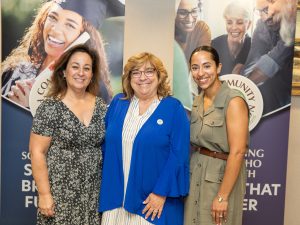 The Community Foundation of Orange, Sullivan and Rockland (CFOSR) is announced significant board leadership changes, effective July 1 with the beginning of the new fiscal year.
CFOSR announced Margaret (Maggie) Smith as the new Chairperson of its Board of Directors, effective July 1. Smith has been a valued board member since 2014, contributing significantly as a member of the finance committee. As the past president of First Federal Savings of Middletown, Maggie brings a wealth of expertise in finance, human resources, and operations. Maggie is a lifelong community volunteer who served as board chairperson at the YMCA of Middletown, member of the Garnet Foundation board, treasurer for the Wallkill Rotary Club, as well as treasurer and board member for Leadership Orange.
In addition to new board leadership, CFOSR is also welcoming four new board members. Adrienne Jensen, Executive Director at EverGreen Meadow Academy, Vanessa McPhillips, Vice President of Operations and Strategy at the Sullivan County Partnership for Economic Development, Damiane Doyle, 1st Vice President Director of Commercial Lending at Orange Bank & Trust Company, and Dr. Michele Winchester-Vega, Doctor of Psychiatric Social Work at Dr. Michele Winchester-Vega and Associates.
These additions also come with the implementation of County Advisory Committees for each of the counties CFOSR serves. The purpose of these committees is to develop new relationships with fund prospects and community-based organizations in Orange, Sullivan and Rockland. The Honorable Robert Onofry will be stepping up as chairperson for the Orange County Advisory Committee, Kirsten Harlow Foster will be stepping up as chairperson for the Sullivan County Advisory Committee, and Debra Thomas will be the chairperson for the Rockland County Advisory Committee.