





|
RCBJ-Audible (Listen For Free)
 |

The High-Tech Stop Arm Program Is Under Scrutiny In Pennsylvania, Long Island and Florida; Motorists In Rockland Continue To Question Whether Program Is About Safety Or Money-Making
By Tina Traster
A company that provides technology to equip school buses with cameras that snag motorists accused of passing stopped school buses is under scrutiny in Pennsylvania, Long Island, and Florida.
Elected leaders and local news reports have been shedding light on the system that BusPatrol LLC installs and profits from, citing unreliable ticketing due to technology limitations and human error, long delays in setting hearings for those who contest tickets, ticketing on four- to six-lane roads that make stopping for buses difficult and often dangerous, and punitively high fines often adversely affecting low-income residents. In addition, those pushing back on the partnership program between BusPatrol and municipalities say a disproportionate number of tickets in some jurisdictions are concentrated at particular locations that have other endemic problems including higher speed limits and poor signage.
BusPatrol provides still and video images to the Rockland County Sheriff’s Office, which is charged with making the decision to issue citations based on their review of the evidence. Twice in the past two weeks, RCBJ has requested data from the county for the percentage of video submissions resulting in the issuance of citations compared with those where no citation is issued. The county has declined to provide that information voluntarily. The data is now subject to a FOIL request.
In Rockland County, BusPatrol’s efficacy is being questioned by an increasing number of motorists who claim they’ve been improperly ticketed $250 for an offense they don’t believe they’ve committed. In many cases, motorists who contest tickets prevail; but many say they did not know they can contest the tickets. On Dec. 14, a handful of bus safety tickets were dismissed outright and before a hearing in Nyack Justice Court; a spokesperson from County Executive Ed Day’s office said the violations were dismissed due to “technical difficulties.”
A school bus safety program ticket, gathered from data on a stop-arm camera, is a civil citation issued to the registered owner of a vehicle that passes a stopped school bus with its stop arm out and red lights flashing. The citation is not a moving violation. It does not add points to your driving record, and it doesn’t affect insurance.
Airmont resident Chaim, whose last name is being withheld to protect his privacy, was issued a citation in June 2024 on Viola Road for an alleged violation, which he shared with RCBJ. BusPatrol provides three videos of the alleged violation and three still photos. In this case, which RCBJ reviewed, the first video shows the bus is still rolling to a stop when the driver is passing it; in the second video, the bus’s stop sign is just beginning to swing outward as the driver passes, and the third video shows nothing. It’s difficult to imagine how the County Sheriff’s office approved the issuance of this citation based on the footage.
Chaim never paid the fine but said he did not know, at the time the ticket was issued, that he would have had a chance to contest it until he read about the issue in RCBJ recently.
“I knew I wasn’t guilty, but when I got the citation, the violation was in big bold letters,” said Chaim, who added he’s a mortgage broker who pores over documents all the time and is not unfamiliar with the fine print in documents. After learning that he could have contested the violation, Chaim revisited the ticket to examine the three videos of the incident on alertbus.com by inputting the violation number and a license number.
“In my case, I could see the bus was still moving when I passed it,” said Chaim. “ It’s like when you get an O&R bill. They make it clear in bold how much it is and how to pay it. The average person, like myself, reads a citation but doesn’t realize they have a way to fight it.”
Chaim recently received a “Amnesty Letter” from the Rockland County School Bus Safety Program, saying if he pays the fine, the late fees will be waived.

In less than two years since the program’s inception, more than 45,000 tickets have been issued countywide – an alarmingly high number given Rockland’s population of 330,000 people, a significant percentage of whom do not drive.
New York’s School Bus Safety Programs, like Operation Safe Stop, are sponsored by the Governor’s Traffic Safety Committee (GTSC), the NYS Education Department, the NY Association for Pupil Transportation (NYAPT), the NYS School Bus Contractors Association, the student transportation industry, and local law enforcement. They often partner with tech companies like BusPatrol and Verra Mobility for stop-arm camera enforcement. These initiatives, funded by violators, aim to stop drivers from illegally passing stopped buses via education, technology, and strict enforcement.
In 2023, Rockland County partnered with BusPatrol, a private company based in Lorton, Virginia, to equip school buses countywide with stop-arm cameras. The bulk of the collected revenue — 55 percent — goes to BusPatrol, with 45 percent to the county. The county covers costs incurred by the Rockland County Sheriff’s Office to review thousands of videos submitted to decide which ones to charge and to the County Attorney’s Office to cover hearings when drivers contest liability. Neither the county nor the Sheriff’s office responded to requests for the breakdown of fees. Every school district in Rockland County is participating in the program.
Jean Soulière in 2017 founded BusPatrol based on a belief that there is a widespread and dangerous problem with motorists illegally passing stopped school buses, and from his personal experience witnessing a child being hit by a car near a school bus when he was a teenager. While working in the high-tech transportation logistics industry, he used data from a one-day national survey by the National Association of State Directors of Pupil Transportation Services (NASDPTS) that recorded tens of thousands of stop-arm violations in a single day across North America to pursue his mission. Soulière seized on an opportunity to use technology and a violator-funded business model to solve what he believed was a critical and unaddressed safety issue.
In January 2024, Jean Soulière sold a majority stake in BusPatrol to the private equity firm GI Partners, with additional investment from Fit Ventures. Following the sale, Karoon Monfared was appointed as the new CEO. Jean Soulière, the company’s founder, transitioned out of the CEO role but remained involved during the transition period. In June 2024, the company secured further growth capital from Weatherford Capital to expand its school bus safety technology across North America.

While exact yearly figures vary, recent data shows there are 2-3 student fatalities annually nationwide caused by vehicles illegally passing stopped school buses, according to the USDOT and state surveys, though total school bus-related deaths (including bus occupants) average over 100 yearly, with most coming from other vehicles or types of crashes. From 2000-2023, there were 61 fatalities nationwide from drivers illegally passing stopped school buses, averaging 2.5 deaths per year, with nearly half being children 18 and younger, according to Traffic Safety Marketing, based on data from the NHTSA’s National Center for Statistics and Analysis, an arm of the United States Department of Transportation.
Bus Patrol Has Spent More Than $2 Million Lobbying New York State & Local Governments
BusPatrol is working aggressively to add municipalities and school districts to its client list.
Between 2019 and 2023, BusPatrol America spent more than $1.61 million lobbying the New York state executive branch and legislators, according to New York State Commission on Ethics and Lobbying in Government. In 2024, BusPatrol spent an additional $588,000 on lobbying efforts related to a school bus camera law amendments being considered by the State Legislature as part of the state budget. BusPatrol has lobbied for a law that would prohibit the operation of a school bus on public highways without a functioning stop-arm on each side of such bus. The company has retained six different firms to lobby on its behalf in New York State.
With the proliferation of tickets — it appears nearly everyone in Rockland County has been ticketed or knows someone who has, and taxpayers are asking whether the monetary burden is justified. In those specific locations where the most tickets are issued, residents ask if there are means – other than ticketing – to improve student safety.
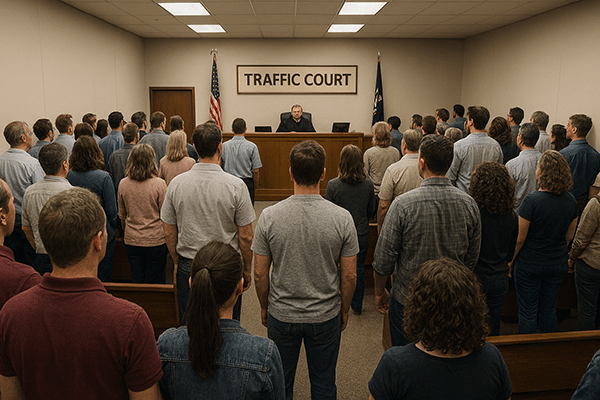
In recent weeks, numerous residents have contacted RCBJ to say they believe they’ve been illegally ticketed or have simply paid the fine because they didn’t know they could contest it, or that it’s just easier to pay the fine than spend half a day in traffic court. They decry a program that seems to overly burden taxpayers with hefty fines ($250 for the first offense, $275 for the second and $300 for the third), saying the program should be reexamined until the technology or ticket review is more precise and transparent. Many say fines on major roads like Routes 303 and 304 make no sense because it’s impossible to stop when traffic is flowing at high speeds.
“This is very disappointing because the government is just putting the burden on taxpayers,” said another motorist who was ticketed but requested anonymity.
New York Vehicle and Traffic Law VTL § 1174, which spells out the rules for overtaking and passing a school bus, has been part of New York law for a long time. The law has been amended through the years through various bills sponsored by different legislators. One significant amendment, VTL § 1174-a, authorized the use of school bus photo violation monitoring systems (stop-arm cameras) to enforce VTL § 1174.

In 2019, Gov. Andrew Cuomo signed the measure, known as the “School Bus Camera Safety Act,” and it became a law that shifted the legal framework to hold the vehicle owner liable for violations captured by cameras, rather than requiring a police officer to identify the driver. The program was designed to be funded by revenue collected from violators, allowing districts to implement the technology at no cost to taxpayers.
In 2024, Assemblyman Michael Durso (Ninth Assembly District) introduced a bill to amend New York’s school bus stop-arm camera law to allow drivers to pass a school bus on public highways with six or more lanes divided by a median when traveling in the opposite directions. The bill remains in committee.
Sen. Bill Weber Introduced Bill To Expand BusPatrol’s Stop-Arm Safety Program To BOCES
Meanwhile, Sen. Bill Weber in 2024 introduced a bill in the New York State Senate that would expand the law to allow Boards of Cooperative Educational Services (BOCES) to install school bus stop sign cameras. Under the law, New York State limits the technology to school districts, which is not how BOCES is defined. The bill remains in committee.
In response to a Dec. 14th RCBJ editorial citing concerns over the program’s readiness and reliability, County Executive Ed Day defended it in a Dec. 19th press release: “This program is doing exactly what it was designed to do — save children’s lives by changing behavior.” In the eight-paragraph press release, Day offers statistics to support the program. Included in bold letters on the press release is: “Drivers who receive a liability notice can view the violation and/or pay the citation online at www.alertbus.com. You can also pay by phone or direct questions to BusPatrol at 1-877-504-7080.” What the release doesn’t say is that motorists can “contest” tickets, though it mentions alertbus.com, the portal used to look up violations on video.






The BusPatrol program has drawn intense scrutiny nationwide.
In Florida, a Miami Herald and Tributary investigation found BusPatrol’s initial contract allowed it to keep up to 70% of revenue, reduced to 60% after two years. In Miami-Dade County, the Herald reported BusPatrol cameras recorded more than 11,000 violations in two weeks, potentially generating millions for the company. Additional reports also revealed the district failed to appropriately vet its contract with BusPatrol, according to a report released by the district’s internal auditor.
The Miami-Dade Sheriff’s Office ultimately halted the BusPatrol program in April 2025 due to what it said were significant errors in the traffic citations triggered by the vendor, which included incorrect fee amounts and other mistakes that made it difficult for people to pay or appeal the tickets.
In New York, Newsday recently reported BusPatrol offered to pay two districts up to $1 million to join the program — offers that surfaced after revelations that more than 80,000 citations had been issued in four districts that had not authorized the program.
LehighValleyNews.com has been doing a series of investigative pieces on BusPatrol over the past year, highlighting instances of people who are waiting more than a year for hearings on citations. Its reporting shows the Pennsylvania school districts participating in the program issued more than 76,000 stop-arm violations in 2024 through automated school bus cameras, generating over $23 million in fines, according to an annual report from the state Department of Transportation. The most recent LehighValleyNews story says the report was released Friday, days after its statutory deadline — and only after LehighValleyNews.com began questioning lawmakers about why it had not been made public.